

Office relocation in Portland requires structured planning, coordinated execution, and careful timing to avoid business disruption. It involves managing logistics, vendors, technology, and physical assets across multiple phases—before, during, and after the move. Without a clear plan, even small missteps can lead to costly downtime and operational delays.
At a high level, every successful office move follows three core phases:
- Pre-Move Planning: Inventory, scheduling, and vendor alignment
- Move Execution: Packing, transport, installation, and setup
- Post-Move Closeout: System testing, adjustments, and space turnover
Your business doesn’t pause just because you’re relocating. In dense environments like Downtown Portland, building rules—freight elevators, loading docks, and strict access windows—can dictate your entire schedule. Miss one window, and delays stack quickly.
That’s why office relocation is less about moving items and more about maintaining continuity. Every piece—from desks to data connections—must be in the right place at the right time. When handled correctly, your team walks into a fully functional workspace. When it’s not, productivity suffers immediately.
How to Plan an Office Move Without Disrupting Your Business
To plan an office move without disrupting operations, start 8–12 weeks in advance with a structured timeline that includes asset mapping, vendor coordination, and phased scheduling. Clear communication and early planning reduce downtime and prevent last-minute delays.
Planning is where most moves succeed or fail. The goal isn’t to react on moving day—it’s to eliminate surprises before they happen.
8–12 Weeks Before Move
- Define scope, timeline, and internal stakeholders
- Inventory furniture, equipment, and technology
- Engage movers, IT teams, and installation vendors
6–8 Weeks Before Move
- Build a detailed move schedule (including phases if needed)
- Assign internal responsibilities and communication plan
- Coordinate building requirements and access
2–4 Weeks Before Move
- Finalize packing strategy and labeling systems
- Confirm vendor sequencing and timing
- Prepare employees for transition
In areas like the Pearl District, this level of planning is critical. Older buildings and shared infrastructure often limit elevator access and loading times, meaning your schedule must align with building management—not just your own timeline.
The outcome of good planning is predictability. Everyone knows what’s happening, when it’s happening, and how their role fits into the process.
What’s Included in Professional Office Relocation Services?
Professional office relocation services include packing, transportation, furniture disassembly and installation, IT relocation, and decommissioning. Full-service providers coordinate these elements to ensure your new space is operational from day one.
A complete office relocation typically includes:
- Packing & Labeling: Organized, trackable movement of assets
- Furniture (FF&E) Services: Disassembly, transport, and reinstallation
- Technology Relocation: Disconnecting, moving, and reconnecting systems
- Decommissioning: Clearing and preparing your previous space for turnover
The difference between basic movers and full-service partners comes down to coordination. If one piece is out of sequence—like IT arriving before desks are installed—everything slows down.
In suburban areas like Beaverton, access is usually easier, but that doesn’t eliminate complexity. Larger office footprints and phased moves still require precise timing to keep teams operational throughout the transition.
A well-coordinated relocation ensures that when employees arrive, everything works. That’s the standard that matters.
Office Relocation Costs in Portland (And What Actually Drives the Price)
Office relocation costs in Portland are driven more by complexity than size or distance. Building access, scheduling constraints, and downtime risk often have a greater impact on cost than the physical move itself.
Key cost factors include:
- Building Constraints: Elevator access, loading zones, and shared facilities
- Timing Requirements: After-hours or weekend moves to reduce disruption
- Technology Complexity: Workstations, servers, and network dependencies
- Phasing: Moving in stages vs a single transition
- Downtime Impact: Lost productivity during the move
For example, relocating within Downtown Portland can cost more than a longer move simply due to coordination challenges. Limited access and tight scheduling windows increase labor time and complexity.
By contrast, moves along major corridors like Interstate 5 (I-5) may involve longer travel but offer more predictable scheduling. That often improves efficiency despite the added distance.
The key insight: reducing downtime is often more valuable than reducing line-item costs. A well-managed move protects productivity and delivers better overall value.
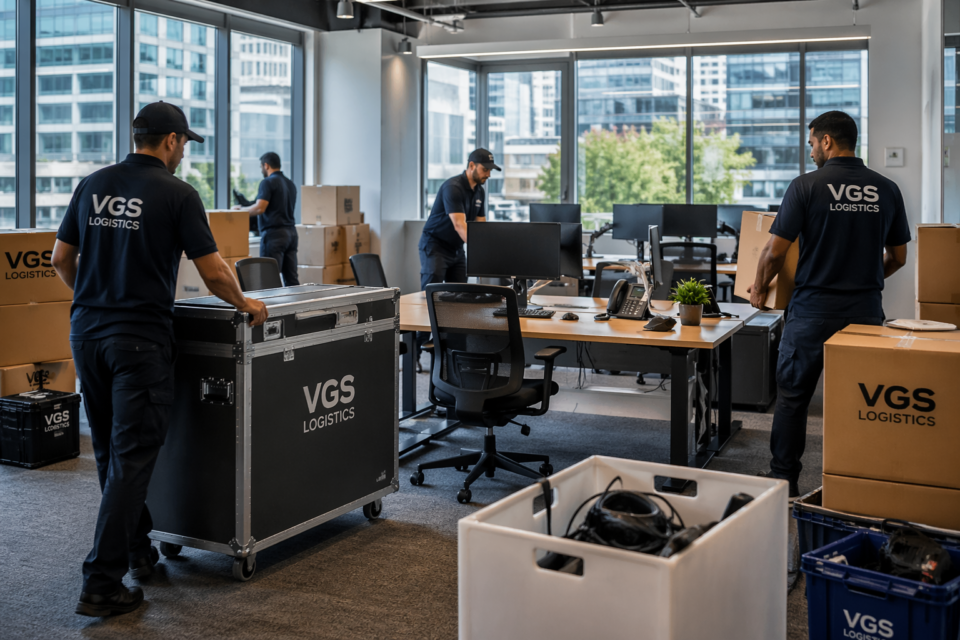
Common Office Moving Mistakes That Cost Companies Time and Money
Most office relocation issues come from coordination failures—not physical moving challenges. Planning gaps and misaligned teams create delays that impact your entire operation.
Common mistakes include:
- Starting Too Late: Compresses planning and increases risk
- Separating IT from Move Planning: Creates delays in system setup
- Overlooking Building Logistics: Missed elevator or dock windows cause major delays
- Lack of Coordination: Vendors working independently create gaps
- No Contingency Planning: Small issues escalate without backup plans
In areas like the Lloyd District, shared building infrastructure requires precise coordination. Missing a scheduled window can push your entire move off track.
Even in more flexible environments like Hillsboro, complexity still exists. Larger campuses often require phased moves and coordination across departments, which introduces different challenges.
The takeaway: most problems can be avoided with structured planning and centralized coordination.
The Hidden Variable: Why Office Relocations Succeed or Fail in Portland
Office relocation success is shaped by how well your plan adapts to real-world conditions—especially location-specific constraints that most companies overlook.
Access Shapes Execution
In high-density areas like the Central Eastside, access is controlled by building limitations. Freight elevators, shared docks, and restricted timing windows all affect how quickly your move can happen.
Suburban locations offer more flexibility, but that doesn’t guarantee efficiency. Without disciplined planning, that flexibility can lead to disorganization.
Friction Matters More Than Distance
A short move within a dense urban core can take longer than a relocation across the metro area. Traffic flow, congestion, and staging limitations all introduce friction that slows execution.
Sequencing Drives Success
Sequencing means aligning furniture installation, IT setup, and employee transitions so everything works together. If one piece is delayed, it affects everything else.
In multi-tenant environments or phased moves, sequencing becomes even more critical. Proper coordination ensures each stage flows into the next without interruption.
The “Day One Ready” Standard
The goal isn’t just to move—it’s to be fully operational immediately. Workstations, systems, and workflows should function without delay when employees arrive.
Why This Matters
Most advice treats office relocation as a logistics problem. In reality, it’s a coordination problem shaped by environment, timing, and dependencies. Understanding that difference changes how you approach the entire process.
Bringing It All Together: A Smarter Way to Approach Office Relocation
A successful office relocation in Portland isn’t defined by how fast you move—it’s defined by how well everything works when you’re done. When planning, coordination, and execution are aligned, your move becomes a controlled transition instead of a disruptive event.
The most important takeaway is this: office relocation is about managing dependencies. Timing, sequencing, and location-specific constraints all play a role, whether you’re navigating a dense downtown building or coordinating a phased move across a larger suburban space. Companies that approach relocation as a system consistently avoid downtime and maintain productivity.
If you’re preparing for an office relocation in Portland, start with a clear timeline, align your vendors early, and focus on continuity above all else. With the right structure in place, you can move your business forward without disruption—and step into your new space fully ready to operate from day one.