
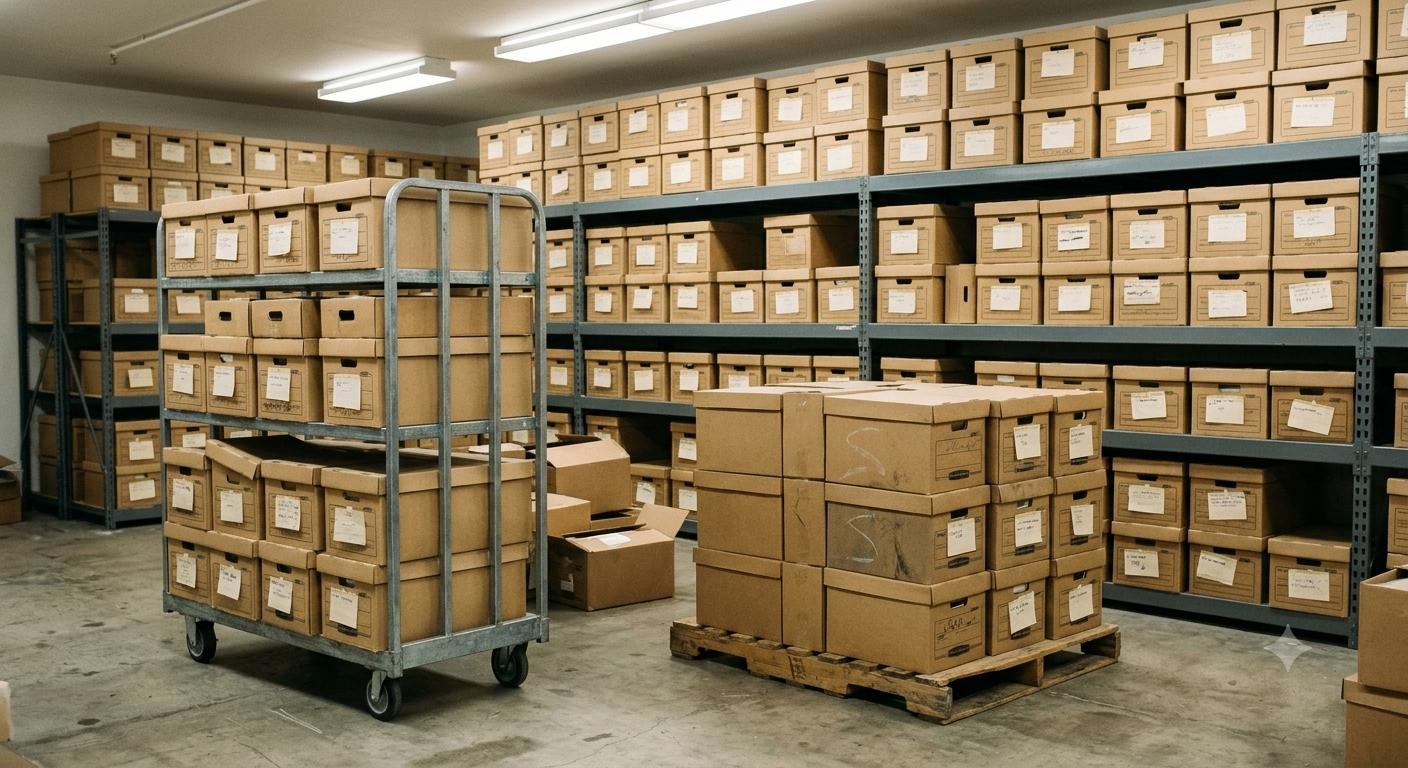
A move date forces a decision that most organizations have been deferring for years: what actually needs to travel to the new space. Records accumulate during normal operations without anyone auditing them against a retention schedule, and a relocation is usually the first moment anyone looks at the full volume and asks whether it should all come along.
Getting this decision right before the move, not during it, changes what you pack, what you pay to move, and what you have to explain later if something that should have been destroyed on schedule instead sat in a box for another five years.
Start with the retention schedule, not the boxes
The question is never “do we need this.” It is “what does our retention schedule say about this.” Most organizations already have one, whether formalized in a records management policy or set by an industry-specific regulation. The move is the forcing function to actually apply it, rather than the moment to make a fresh judgment call on each file.
Three categories fall out of that schedule:
Active retention. Still within its required or useful retention period. This moves.
Past retention, no legal hold. The schedule has expired and nothing else requires it to be kept. This is a destruction candidate, not an automatic one, but a genuine one.
Uncertain or disputed. No clear schedule entry, mixed records that were never separated, or anything under a legal hold, audit, or open litigation. This does not get destroyed under any circumstances until the uncertainty is resolved, and it should not be relocated by default either. It should be flagged and reviewed.
What actually needs to relocate
Active records are the easy call. The harder judgment sits with things that are not strictly “records” but function the same way: reference materials, working archives staff consult regularly, and physical collections that support day-to-day operations rather than compliance.
For these, the question is usage, not age. A collection accessed weekly earns its place in the new space regardless of how old it is. A collection nobody has opened in three years is a storage or destruction candidate even if it is technically still within a retention window, because “allowed to keep” and “needs to be immediately accessible” are different questions.
What belongs in storage instead of the new space
Not everything that needs to be kept needs to be at the new address on day one. Records within retention but rarely accessed are a legitimate storage candidate, freeing shelf and floor space in the new location for what staff actually use.
This decision should be made against your actual retention timeline, not a blanket policy. A record with two years left on a seven-year schedule is a different storage decision than one with two months left, because the second one is closer to a destruction decision than a long-term storage commitment.
What should not move at all
Past-retention records with no legal hold are the clearest candidates for destruction rather than relocation, and moving them anyway is one of the more common and avoidable costs in a records-heavy relocation. Paying to pack, transport, and re-shelve material that could have been destroyed on schedule is money spent maintaining a compliance gap rather than closing one.
The reason this happens is usually not oversight. It is that nobody owns the decision until a move forces the question, and under deadline pressure the easiest call is to box everything and sort it out later. Later rarely comes.
Who should make this call?
Retention and destruction decisions belong with whoever owns your records management policy, legal counsel, or compliance function, not with whoever is packing boxes. The move creates the deadline. It should not create the decision-making authority.
The practical sequence that avoids a bottleneck: retention review happens well before the move date, with a clear list of what relocates, what goes to storage, and what is cleared for destruction, so the move itself is executing a decision that has already been made rather than making it under time pressure.
What VGS handles once the decision is made
Sorting active from expired records is a policy decision your organization makes. Once it is made, moving and storing what stays is the physical part.
VGS Logistics provides records and library moves with structured cataloging, specialized packing, and climate-controlled transport for materials that need to relocate, along with storage for anything that should stay within retention but does not need to be on-site at the new location immediately.
Tell us your volume and timeline, and we will build the relocation and storage plan around the retention decisions you have already made.
Request a quote or call 503.878.5102.